


Trusted Clients
Struggling to rank in US and UK, convert, and scale in an ever-evolving digital world? You’re not alone. The SEO game has changed—Google’s AI-driven algorithms demand more than just keywords; they crave expertise, authority, and value. That’s where we come in.


I’m Skelliewag, an AI-driven SEO strategist with 16 years of experience helping brands rank, convert, and grow. As a former author at Copyblogger & ProBlogger, I’ve shaped content strategies for some of the internet’s most influential platforms.
I specialize in AI-powered SEO, content optimization, and authority building, ensuring your brand doesn’t just rank—it dominates. Our approach? Data-driven, AI-enhanced, and built for long-term success.
If you’re done with SEO guesswork and ready for real, measurable growth—let’s talk.
https://copyblogger.com/author/skellie/
https://problogger.com/author/skellie/

99 K
SEO isn’t just about rankings—it’s about being the best answer for your audience. We don’t believe in shortcuts or chasing algorithms. Instead, We focus on AI-driven strategies, user-first content, and authority building that make your brand impossible to ignore. Because when you provide real value, rankings follow.
The future of search belongs to brands that adapt, innovate, and earn trust. We see a world where AI and SEO work together to create content that engages, informs, and converts. Our goal? To help businesses not just rank but become the go-to authority in their space.
We help brands cut through the noise and build organic growth in the US and Uk that lasts. Our mission is simple: create AI-powered, data-backed SEO strategies that drive real business results. If you’re ready to move past SEO guesswork and start seeing real impact, let’s make it happen.
Get featured on high-DA, high-DR, and high-traffic websites with strategic guest posting that boosts authority, rankings, and visibility.
Dominate your local market with hyper-targeted optimization, citations, and geo-location strategies to ensure you show up when customers need you most.
We secure premium, white-hat backlinks from authoritative sites, strengthening your domain authority and improving search rankings the right way.
We build fast, SEO-optimized, and mobile-responsive websites that look stunning and convert visitors into customers from UK and USA.
Reach the right audience with high-converting ad campaigns that maximize ROI across Facebook, Instagram, and Google Ads.
Get to the top of local search results with advanced GMB optimization, proximity ranking tactics, and reputation management.
We start with a deep dive into your business, goals, and challenges. We analyze where you stand and uncover growth opportunities.
We conduct data-driven research to identify your audience, industry trends, and what’s working (or failing) for your competitors. This ensures our strategy is ahead of the curve.
Based on insights, We craft a custom, AI-powered SEO & marketing roadmap tailored to your brand. This includes content, backlinks, local SEO, and ad strategies—all designed for sustainable growth.


Reviews From Real Fiverr and Upwork Clients.
Unlike agencies that pass you off to random account managers, when you work with us, you work directly with the expert. With 16+ years in AI-driven SEO, content marketing, and digital growth, we bring hands-on expertise, tailored strategies, and a commitment to real results.
Former Copyblogger & ProBlogger author, 16+ years in SEO, content, and growth marketing, with a track record of success.
SEO is always evolving, and we stay ahead of algorithm changes, AI trends, and emerging strategies to keep you ranking.
From high-authority backlinks to GMB ranking and paid ads, we offer a one-stop solution for your digital growth.
No account managers, no outsourcing—just direct, expert-level guidance focused on your success.

This website experienced a massive traffic drop after a Google Core Update, losing visibility and rankings overnight. Using a data-driven recovery strategy, we identified weak points, optimized content for E-E-A-T, improved technical SEO, and built high-authority backlinks.
🚀 Results: Within few days, the site recovered and surpassed its previous traffic levels, proving that the right SEO adjustments can turn losses into long-term growth.
💡 Core updates don’t have to be the end—adapt, optimize, and dominate.
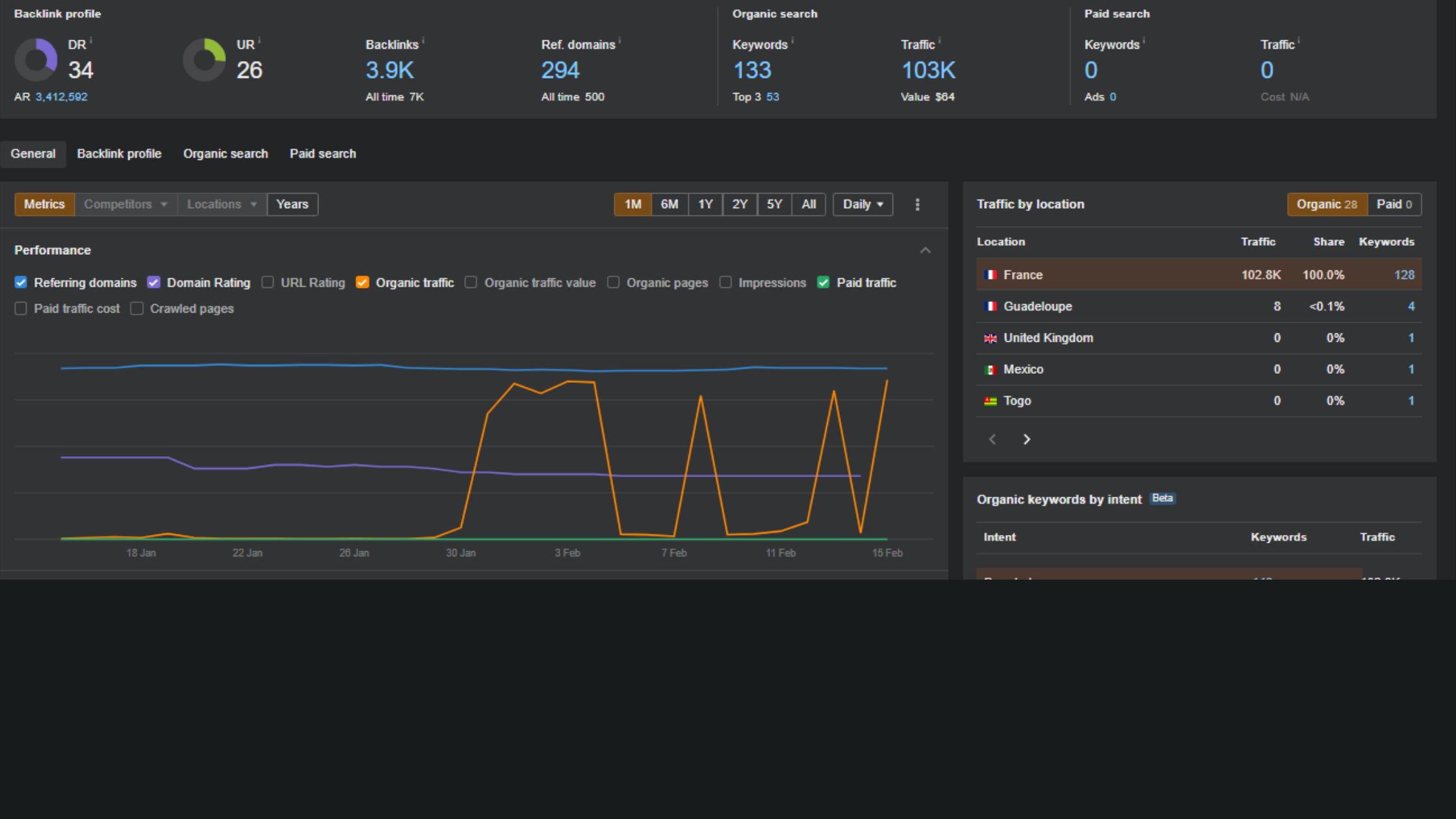
This website skyrocketed to 100K+ organic visitors through a strategic backlink campaign, AI-optimized content, and technical SEO improvements. By securing high-authority, white-hat links, we boosted domain authority, improved rankings, and drove consistent organic growth.
🚀 Result: Increased traffic, stronger search visibility, and long-term SEO dominance.
💡 Smart backlinks = sustainable growth.

This website achieved explosive organic growth by combining AI-driven SEO strategies with high DA/DR guest posting on authoritative sites. Leveraging AI for content optimization, keyword intent matching, and entity-based SEO, we boosted relevance and rankings while securing powerful backlinks from high-traffic websites.
🚀 Result: Increased authority, higher search visibility, and a steady flow of organic traffic.
💡 AI + strategic guest posting = next-level SEO success.

This website’s Domain Rating (DR) skyrocketed past 50 by securing high-authority, white-hat backlinks from trusted industry sites. Through strategic link-building, niche-relevant placements, and AI-powered outreach, we strengthened the site’s authority, making it a trusted player in its space.
🚀 Result: Higher DR, improved rankings, and stronger trust signals for long-term SEO success.
💡 Quality backlinks = domain authority that lasts.

By optimizing Google My Business, local citations, and on-page SEO, we boosted local search visibility, driving a surge in organic traffic. The result? More calls, more visits, and higher conversions from highly targeted local customers.
🚀 Result: Increased local rankings, higher foot traffic, and a steady flow of quality leads.
💡 Visibility in local search = real business growth.

This business achieved top rankings across multiple locations in Baltimore by leveraging geo-gridding, advanced GMB optimization, and silo posting. We optimized Google My Business with proximity-based keyword strategies, structured NAP citations, and hyper-local content, ensuring strong local relevance. Using geo-grids, we pinpointed ranking gaps and strategically optimized for broader city-wide visibility.
🚀 Result: Dominated multiple local search areas, increased calls and walk-ins, and generated consistent high-intent leads.
💡 Precision local SEO = map pack takeover & real business growth.

NY Times (https://archive.nytimes.com/shiftingcareers.blogs.nytimes.com/2007/11/30/fridays-links-thoughts-on-creativity/)

Social Media Examiner (https://www.socialmediaexaminer.com/26-tips-for-using-images-to-engage-fans-and-followers/)

Social Media Examiner (https://www.searchenginepeople.com/blog/blogging-step-1-of-the-authority-building-process.html)

Enternet Users (https://enternetusers.net/blog1846.html?dem_action=view&dem_poll_id=21&paged=19)

Life Hacker (https://lifehacker.com/productivity-in-11-words-30931567)

Copy Blogger (https://copyblogger.com/write-with-clarity/)

Pro Blogger (https://problogger.com/what-is-the-real-value-of-a-social-media-visitor/)

Creative Boom (https://www.creativeboom.com/resources/top-43-useful-websites-and-tools-for-freelancers/)
We serve in areas across the United States, helping businesses enhance their online presence. Our SEO services are available in various cities, including Spokane, San Marcos, Fayetteville, Arvada, Yonkers, Oklahoma City, Hollywood, Boise, Brownsville, Birmingham, Amarillo, Rockford, Palm Bay, Clearwater, Lincoln, Springfield, Portland, Salt Lake City, Jackson, Grand Rapids, Cape Coral, Naperville, Moreno Valley, Rochester, Anchorage, Greensboro, Newark, St. Louis, Cincinnati, Pittsburgh, St. Paul, Henderson, Plano, Stockton, Scottsdale, Modesto, Albuquerque, Milwaukee, Des Moines, Tucson, Baton Rouge, Tucson, Hialeah, North Las Vegas, Port St. Lucie, San Bernardino, Richmond, Fremont, Glendale, Durham, Orlando, Chandler, Lubbock, Madison, Winston-Salem, Gilbert, Reno, Fort Collins, Irvine, Lexington, Boston, Detroit, Buffalo, Nashville, Mesa, Chula Vista, Fresno, Sacramento, Washington, D.C., El Paso, Riverside, Louisville, Baltimore, Atlanta, Vancouver, Springfield, Kansas City, Miami, Provo, Corpus Christi, Salt Lake City, Garden Grove, Overland Park, Peoria, Raleigh, Omaha, Fayetteville, Sioux Falls, Columbia, Thousand Oaks, Virginia Beach, Minneapolis, San Diego, Dallas, Phoenix, San Antonio, Philadelphia, Austin, Houston, Santa Ana, Oakland, Long Beach, San Jose, Los Angeles, New Orleans, Bakersfield, Jacksonville, New York City, Arlington, Indianapolis, Chicago, Memphis, Honolulu, Cleveland, Anaheim, Denver, Columbus, Seattle, Las Vegas, Tampa, Tulsa, Fort Worth, San Francisco, Charlotte.
We serve in areas across the United Kingdom, helping businesses improve their SEO performance. Our services are available in cities like Hastings, Colchester, Southend-on-Sea, Woking, Darlington, Harlow, Greenwich, Bexley, Solihull, Wokingham, Milton Keynes, Newcastle upon Tyne, Basingstoke, Rochdale, Plymouth, Norwich, Stockport, Rotherham, Oldham, Ipswich, Blackpool, Telford, Swansea, Swindon, Reading, Cardiff, Slough, Wakefield, Walsall, Luton, Wolverhampton, Portsmouth, Bradford, Derby, Sunderland, Leicester, Kingston upon Hull, Middlesbrough, Stoke on Trent, Nottingham, Manchester, Leeds, Birmingham, Edinburgh, Coventry, London, Glasgow, Sheffield, Liverpool, Bristol.
Skelliewag SEO Agency | All Rights Reserved